Benefits of Installing an Indianapolis Water Softener
September 24, 2026
Is Well Water Safe to Drink?
September 24, 2026How Does Well Water Work?
How does well water work? It is a question many Indianapolis homeowners ask when they move to a property with a private well for the first time. The answer matters more than most people realize.
Unlike city water, private well water is not monitored or treated by a public utility. It comes straight from the ground into your home. What happens between the aquifer and your tap depends entirely on your well water system, your local geology, and whether the right well water treatment is in place.
Here is a clear, straightforward explanation of how it all works.
Water Starts Underground
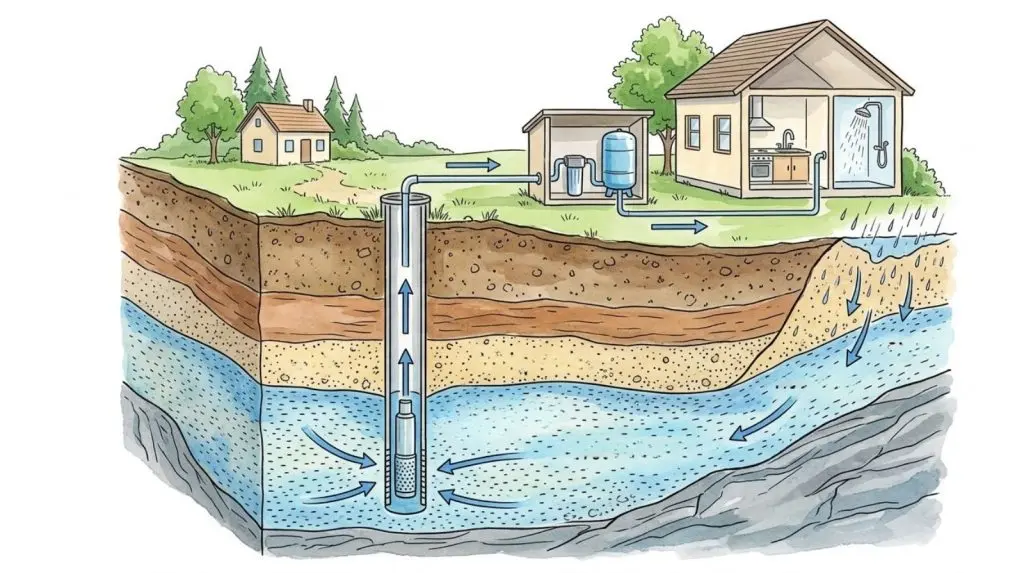
Groundwater is the source of every private well. Rain and snowmelt move through soil and rock, collecting in underground layers called aquifers. A drilled well accesses that water by penetrating deep enough to reach a reliable groundwater source. The Indiana Department of Natural Resources monitors groundwater levels across the state to better understand aquifer conditions, water availability, and long-term groundwater trends.
As water travels through soil and rock on its way to the aquifer, it picks up whatever it encounters. Minerals. Sediment. Gases. In some cases, contaminants from nearby land use. That is why well water quality varies dramatically from one Indianapolis property to the next, even between neighboring homes drawing from similar depths.
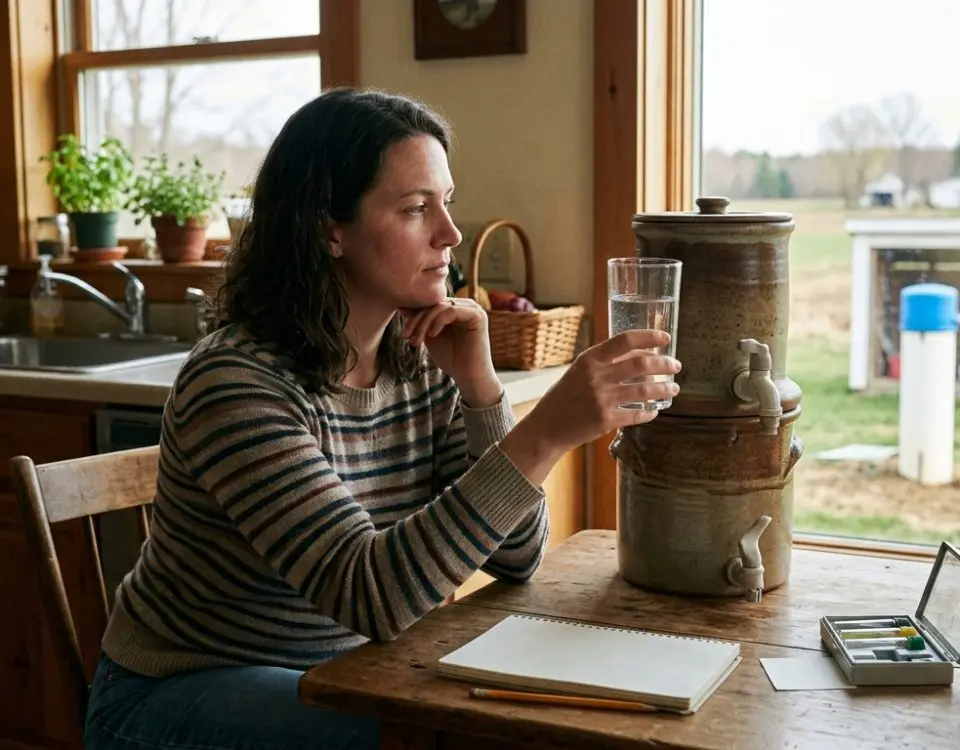
Clear water is not proof of clean water. The only way to know what your well contains is to test it.
A residential well water system moves groundwater from the aquifer into your home through a sequence of components working together. Understanding each part helps you identify problems quickly when something changes.
Here is how the system works from start to finish:
The well and casing. The drilled well opening is lined with a casing, typically steel or PVC, that protects the water from surface contamination. A well cap at the top seals the opening. A damaged or loose cap is one of the most common entry points for bacteria and surface runoff.
The pump. Most modern residential wells use a submersible pump installed inside the well casing below the water level. The pump pushes water up through the supply line into the home. Shallow wells may use an above ground jet pump instead.
The pressure tank. Water from the pump flows into a pressure tank before entering the home’s plumbing. The tank stores pressurized water so the pump does not have to run every time a tap opens. Without it, the pump would cycle on and off constantly, wearing out far faster than it should.
The pressure switch. This component monitors pressure in the tank. When pressure drops below the set point, it turns the pump on. When pressure reaches the upper limit, it shuts the pump off. Short cycling, where the pump turns on and off rapidly, often points to a failing pressure tank or a waterlogged tank that has lost its air charge.
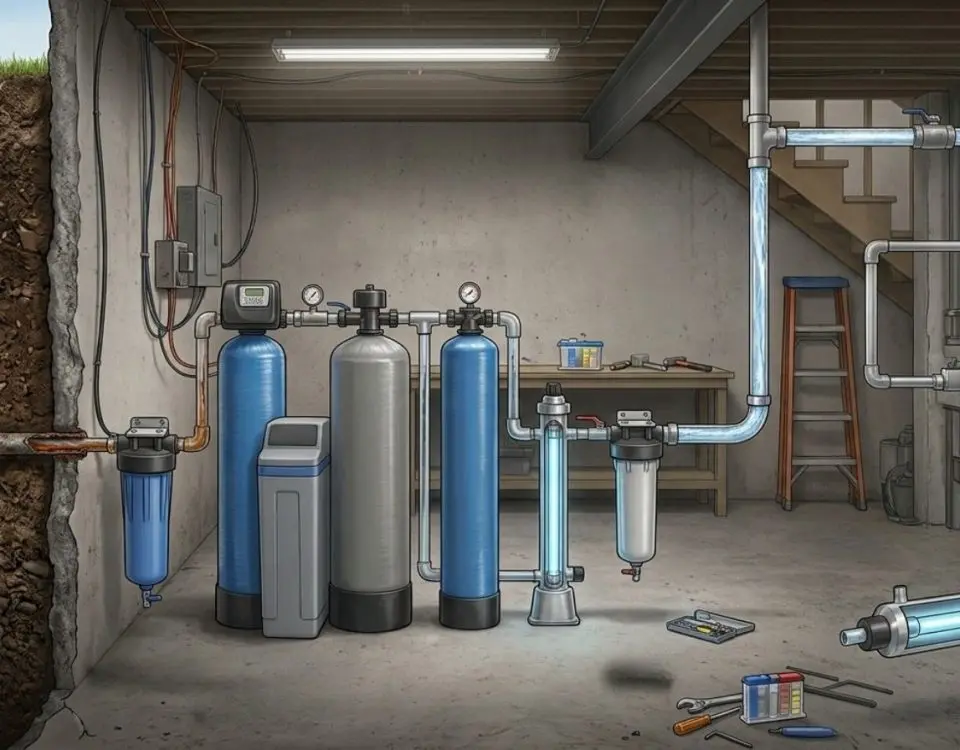
Point of entry treatment. After the pressure tank, water may pass through well water filtration equipment before reaching fixtures, appliances, and taps throughout the home.
Why Well Water Quality Varies
In a statewide test of nearly 10,000 private Indiana wells, about 1 in 4 tested positive for bacteria (Indiana State Board of Health, via Purdue Extension WQ-15).
Two Indianapolis homes on the same street can have completely different well water. Depth, geology, nearby agriculture, aging well components, plumbing materials, and seasonal changes all affect what comes out of the tap.
Common well water concerns include:
- Sediment and grit making water appear cloudy or clogging fixture screens
- Iron and manganese causing reddish brown or black staining and metallic taste
- Hard water minerals leaving scale on fixtures, water heaters, and appliances
- Hydrogen sulfide producing the rotten egg odor familiar to many well owners
- Low pH making water corrosive to copper plumbing and fixtures
- Bacteria and microorganisms entering through a compromised well cap or flooding event
- Nitrates from fertilizer or septic systems, which the EPA flags as a particular concern for infants
None of these announce themselves reliably through taste or appearance alone. A professional water test is the only dependable starting point.
Well water filtration is the stage where water quality problems get solved before water reaches your household. The right setup depends entirely on what your test results show.
Common water treatment systems for well water include:
- Sediment filters to capture sand, silt, rust, and particles that affect clarity and protect downstream equipment
- Iron and manganese filters to help reduce staining, metallic taste, and discoloration
- Water softeners to reduce hardness minerals that cause scale throughout plumbing and appliances
- Acid neutralizers to raise low pH and stop corrosive water from attacking copper pipes and fixtures
- UV disinfection systems to address bacteria and microorganisms after sediment has been removed
- Activated carbon filters to improve taste, odor, and reduce certain chemical compounds
- Reverse osmosis systems installed at the drinking water tap for high performance reduction of dissolved contaminants
Treatment Order Matters
A well water treatment system is only as effective as its design. The order in which water passes through each stage makes a real difference in performance.
Sediment must typically be removed before water reaches UV disinfection equipment. UV light cannot penetrate cloudy or particle laden water effectively. Iron filters need to be positioned correctly relative to softeners. An acid neutralizer raises pH but also adds hardness, which may mean a softener is needed downstream.
A professional assessment helps design a well water treatment system where each component supports the next rather than working against it.
When To Test And Treat
Indianapolis homeowners on private wells should test their water at least once a year for common safety concerns. Test immediately when:
- Water changes in taste, color, odor, or clarity
- The well cap is damaged, cracked, or has been disturbed
- Flooding, heavy runoff, or nearby construction has occurred
- A new household member is pregnant, an infant, elderly, or immunocompromised
- Buying a property with an existing well
After installing well water treatment systems, retest to confirm the system is performing as intended. A neglected or improperly maintained system can lose effectiveness quietly.
Zenith Pure Solutions Can Help
At Zenith Pure Solutions, every visit starts with a free in-home water test, and we arrange certified lab testing for bacteria and other well-specific concerns. We test your water before recommending any equipment. Our trained local technicians identify what is in your water, explain the results clearly, and recommend the right well water treatment system for your specific conditions.
We serve Indianapolis and surrounding communities. Every consultation is free, with no obligation and no pressure.
Contact Zenith Pure Solutions today to schedule your free in home water test and find out exactly how your Indianapolis well water system is performing.
The Bottom Line
How does well water work? Groundwater enters the well, a pump moves it into the pressure tank, and from there it flows through your home’s plumbing. What happens to water quality along that journey depends on your local geology, your well’s condition, and whether the right well water filtration and treatment are in place.
The system works best when you understand it, test it regularly, and treat it based on real data. Private well ownership comes with responsibility. The homeowners who take that responsibility seriously get reliable, clean water. The ones who guess usually find out why testing matters the hard way.
Latest News
-
 Soft Water System Warning Signs: How to Know Your Home Needs One24 Sep 2026 Water Softener
-
 Hard Water Solutions for Indianapolis Homes: What Really Works?24 Sep 2026 Hard Water
-
 Whole Home Filtration System for Well Water: The Truth No One Is Telling You24 Sep 2026 Well Water Treatment
-
 Innovations in Indianapolis Water Treatment Systems24 Sep 2026 Water Treatment
-
Assessing Water Quality Standards in Indianapolis24 Sep 2026 Water Quality

Related posts