
How Does Well Water Work?
September 24, 2026
Up to 50% Less Salt: Meet the Next-Gen Water Softeners
September 24, 2026Is Well Water Safe to Drink? What Indiana Well Owners Need to Know
Is well water safe to drink? It is one of the most common questions Indianapolis homeowners ask when they rely on a private well. The short answer is yes, but only under the right conditions.
Clear water does not mean clean water. Normal tasting water does not mean safe water. Some of the most serious well water concerns have no smell, no color, and no taste. Without well water testing, you are guessing. And when it comes to your family’s health, guessing is not good enough.
Here is what every Indianapolis well water homeowner needs to know.

Your Well, Your Responsibility
No government agency is checking your well water on a regular schedule. No utility company is sending you alerts when something changes. If contaminants enter your water supply, you may not find out until a fixture stains, the water starts smelling wrong, or a test flags it.
Well water safety starts with understanding that you are in charge. That means regular testing, proper maintenance, and the right well water treatment when results show a problem.
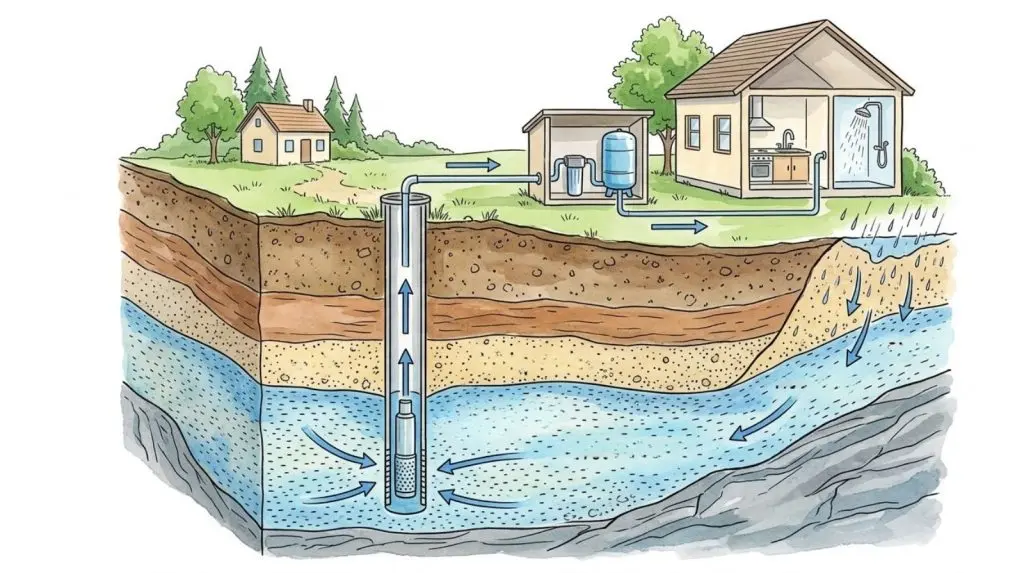
Groundwater is naturally filtered through soil and rock before it reaches your well. That process removes some impurities. It does not remove everything.
Indianapolis area well water can be affected by a range of concerns depending on the well’s location, depth, construction, and surrounding land use. Common issues include:
- Bacteria and microorganisms entering through a damaged well cap, flooding, or nearby septic systems
- Nitrates from fertilizers, animal waste, or septic leaching, which the EPA flags as a particular concern for infants
- Iron and manganese causing reddish brown staining, metallic taste, and discolored laundry
- Hard water minerals leaving scale on fixtures, water heaters, and appliances
- Hydrogen sulfide producing the rotten egg odor many well owners recognize immediately
- Sediment such as sand or silt indicating well disturbance or filtration needs
- Lead, arsenic, or agricultural chemicals depending on the property’s history and surrounding land use
Not every well has every problem. The only way to know what your well contains is to test it.
When To Test Your Well
Well water testing should not be something you do once and forget. Indianapolis homeowners on private wells should test regularly and immediately when something changes.
Test your well water:
- At least once a year for bacteria and nitrates as a baseline safety check
- After flooding, heavy storms, or runoff events that may allow surface water to reach the well
- When water changes in taste, color, odor, or clarity
- Before purchasing a home with an existing well
- After any well repairs, plumbing work, or nearby construction
- When a household member is pregnant, an infant, elderly, or immunocompromised
A certified laboratory gives you the most reliable results for health related concerns. Home test strips have their place, but they are not thorough enough to make confident treatment decisions. Start with real data.
Some well water problems announce themselves clearly. Others hide completely until a test reveals them. Watch for these warning signs:
- Water appears cloudy, rusty, yellow, or discolored
- A rotten egg, musty, chemical, or metallic smell from the tap
- Orange, black, or blue green staining on sinks and fixtures
- Recurring stomach issues after drinking tap water
- Sediment collecting in sink aerators or appliance screens
- A visible crack, loose fitting, or damage to the well cap
- Floodwater, fuel spills, or fertilizer use near the well area
These signs do not automatically mean your water is unsafe. But every one of them is a reason to test immediately rather than wait.
Choosing The Right Treatment
Once you have test results, well water treatment becomes straightforward. You match the solution to the problem. Without results, you are buying equipment based on guesswork.
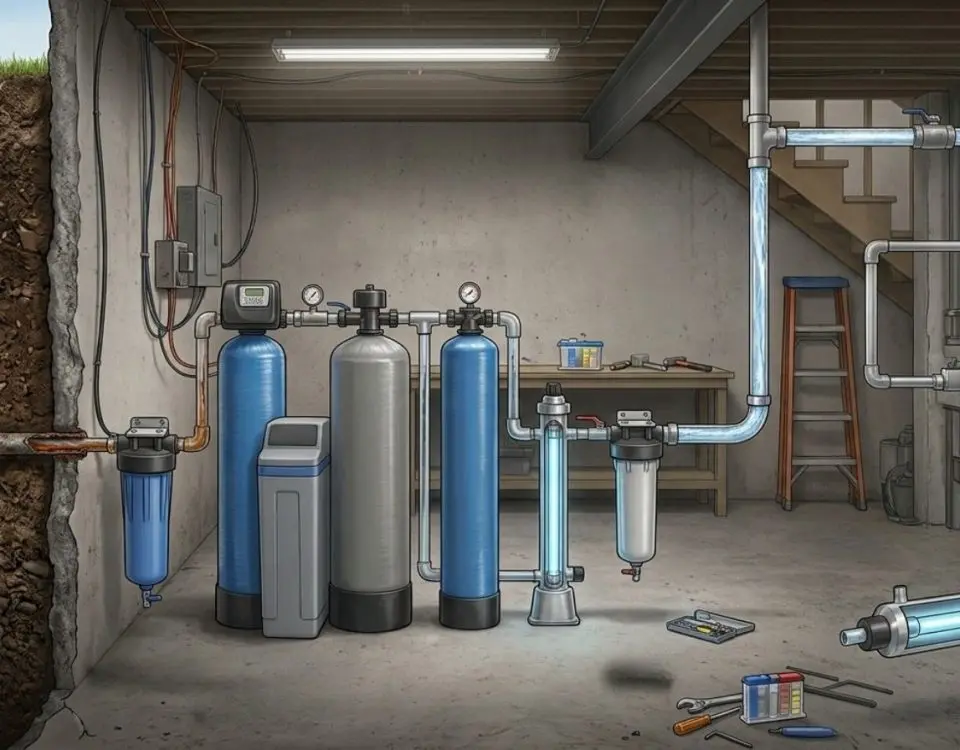
Common water treatment systems for well water include:
- Sediment filters to remove sand, silt, rust, and particles that affect clarity and protect downstream equipment
- Iron and manganese filters to eliminate staining, metallic taste, and discoloration
- Water softeners to reduce hardness minerals that cause scale throughout plumbing and appliances
- UV disinfection to address bacteria and microorganisms after sediment has been removed
- Activated carbon filters to improve taste, odor, and reduce certain chemical compounds
- Reverse osmosis systems installed at the drinking water tap for high performance reduction of dissolved contaminants
- Chemical injection systems for severe iron, sulfur, or bacterial issues requiring oxidation treatment
A complete well water treatment system may combine several of these in a specific order. That order matters. UV light, for example, cannot disinfect effectively if sediment has not been removed first.
The right well water treatment systems for your home depend entirely on your test results, your household’s water usage, your plumbing layout, and your long term maintenance capacity.
Professional Testing And Treatment
Every Zenith visit starts with a free in-home water test. It uses a professional digital analysis of key water chemistry, including hardness, pH and nitrate, with results explained on the spot. Bacteria and some other health-related contaminants can’t be confirmed with an in-home test. For those, we arrange certified laboratory testing, so every treatment recommendation is based on confirmed results rather than guesswork.
At Zenith Pure Solutions, we conduct professional in home water testing for Indianapolis homeowners on private wells. We do not recommend equipment before we understand your water. Every consultation starts with a full assessment of your well water conditions.
Our certified technicians test for hardness, iron, bacteria indicators, pH, and other parameters relevant to well water safety. We walk you through the results clearly, explain what each finding means, and recommend a well water treatment system matched to your actual water profile.
No guesswork. No overselling. Just honest answers grounded in real data from your well.
Contact Zenith Pure Solutions today to schedule your free in home water test and find out exactly what is in your Indianapolis well water.
The Bottom Line
Is well water safe to drink? It can be. But safe well water does not happen by accident. It happens because the homeowner tests regularly, addresses problems promptly, and installs the right treatment when results call for it.
Clear water is not proof of safety. Annual testing is not optional. And the right well water treatment system starts with knowing what your water actually contains.
Start with a test. Build from facts. Protect your household.
Latest News
-
 Soft Water System Warning Signs: How to Know Your Home Needs One24 Sep 2026 Water Softener
-
 Hard Water Solutions for Indianapolis Homes: What Really Works?24 Sep 2026 Hard Water
-
 Whole Home Filtration System for Well Water: The Truth No One Is Telling You24 Sep 2026 Well Water Treatment
-
 Innovations in Indianapolis Water Treatment Systems24 Sep 2026 Water Treatment
-
Assessing Water Quality Standards in Indianapolis24 Sep 2026 Water Quality

Related posts