
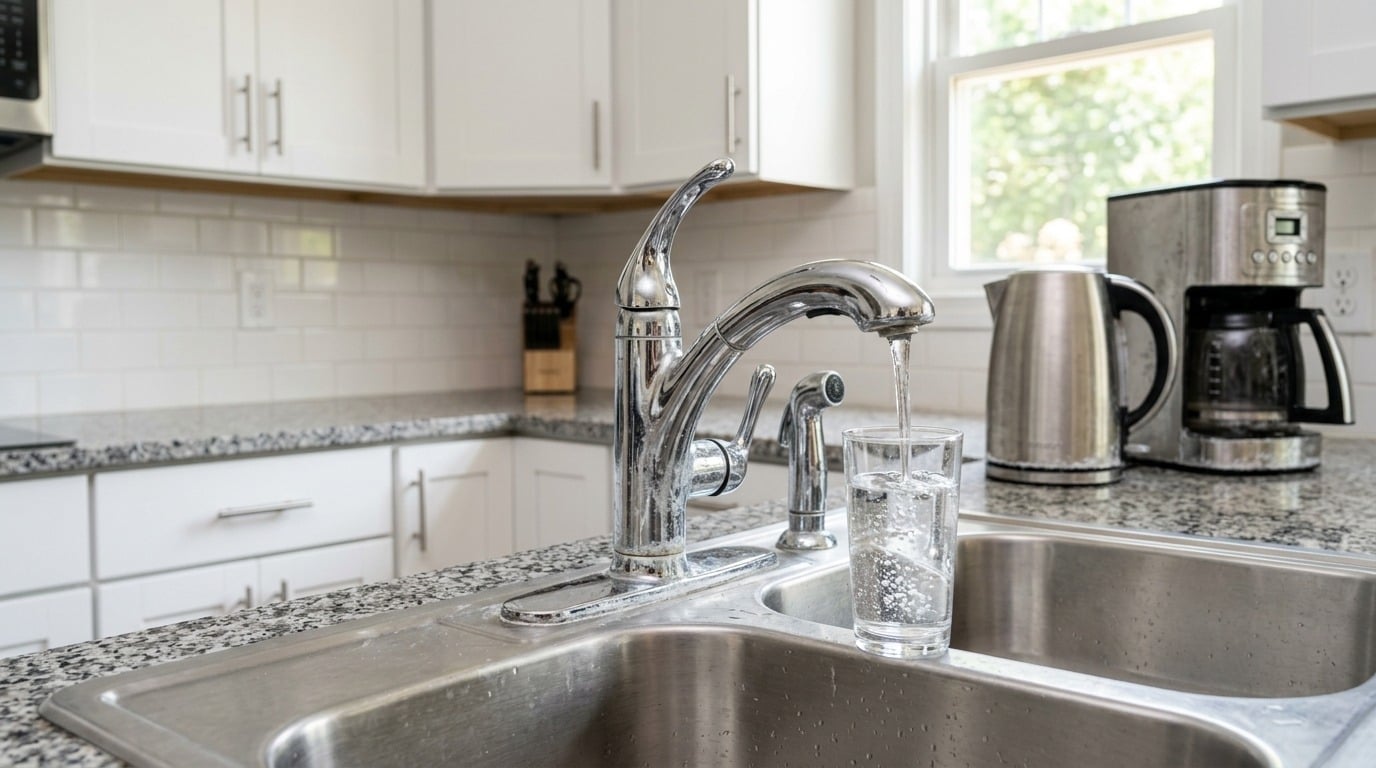
Hard water has a lot of dissolved calcium and magnesium in it. Soft water has little or none. That one difference decides how well your soap lathers, whether your glasses dry clear, and how fast scale builds up in your pipes and water heater.
This guide explains the difference between hard water and soft water, the signs of each, three simple ways to check what you have, and how to deal with hard water stains.
Hard water vs soft water at a glance
| Hard water | Soft water | |
|---|---|---|
| What is in it | Dissolved calcium and magnesium | Little or no calcium and magnesium |
| Soap | Needs more soap and leaves soap scum | Lathers easily and rinses clean |
| Dishes and glasses | Spots or a cloudy film | Dry clear |
| Faucets and showerheads | White, chalky scale | Little or no scale |
| Water heater and pipes | Scale builds up inside | Stay cleaner for longer |
How hardness is measured
Hardness is given in parts per million (ppm, the same as milligrams per liter) or in grains per gallon. One grain per gallon equals 17.1 ppm. The U.S. Geological Survey sorts water into four bands:
| Band | ppm | Grains per gallon |
|---|---|---|
| Soft | 0 to 60 | 0 to 3.5 |
| Moderately hard | 61 to 120 | 3.6 to 7.0 |
| Hard | 121 to 180 | 7.1 to 10.5 |
| Very hard | More than 180 | More than 10.5 |
Indianapolis water is very hard: about 317 ppm, or 19 grains per gallon. Our Indianapolis water hardness guide has the figures for the city and the towns around it.
Signs you have hard water
- Spots on dishes and glasses. A white film or spots that stay after the dishwasher has finished.
- Scale on faucets and showerheads. A white, chalky crust around the spout and on the spray holes.
- Soap scum. A dull film on tubs, tile and shower doors that comes back soon after cleaning.
- Soap that will not lather. You use more soap, shampoo and detergent to get things clean.
- Stiff, dull laundry. Towels feel rough and colors fade sooner.
- Weaker flow. Faucet aerators and showerheads clog with scale.
Our article on the warning signs that your home needs a soft water system goes through these one by one.
Signs your water is soft
- Soap and shampoo lather quickly, and you need less of them
- Glasses and dishes dry without spots
- No new white crust forms on faucets, showerheads or the kettle
- Water feels smooth, even a little slick, when you rinse
Three ways to check your water
- Read your water utility’s report. Many utilities publish the hardness of the water they supply. A private well has no report, so it needs a test.
- Try the soap test. Fill a clear bottle one third full with tap water, add a few drops of plain liquid soap and shake it. Plenty of suds and clear water underneath point to soft water. Few suds and cloudy water point to hard water.
- Have it measured. A test strip gives a rough range. A free in-home water test gives you the number in grains per gallon, measured at your own tap.
How to remove hard water stains
Hard water stains are the minerals left behind when hard water dries. They are white or gray and chalky, and they build up wherever water sits: around faucets, on shower doors, in sinks and toilets. An acid dissolves them. For most surfaces, white vinegar is enough:
- Mix equal parts white vinegar and water in a spray bottle.
- Spray the stain and leave it for a few minutes.
- Scrub with a soft brush or a non-scratch sponge.
- For a stain that stays, mix baking soda into the vinegar and water to make a paste, and scrub again.
- Rinse, then dry the surface completely. Spots come back where water is left to dry.
Do not use vinegar or other acids on marble, limestone or other natural stone, because acid etches the surface. With a store-bought cleaner, follow the label and wear gloves.
Orange or brown stains are a different problem. They come from iron, not hardness, and they need an iron filter.
Cleaning removes the stains you can see. It does not stop new ones, because the minerals are still in the water. To stop them at the source, the hardness has to be treated.
Is hard water bad for you?
Not for your health. The U.S. Geological Survey describes hardness as a nuisance, not a health concern. The cost of hard water is practical: more soap and cleaning, scale in the water heater and pipes, and appliances that wear out sooner. Our article on hard water damage covers what that adds up to.
How to turn hard water into soft water
A water softener removes calcium and magnesium by ion exchange, so the water that reaches your taps is soft. If you are new to softeners, start with what a home water softener is and how it works.
A salt-free water conditioner is a different thing. It reduces scale but leaves the minerals in the water, so the water still tests as hard. Our guide to salt-free water softeners explains the difference.
The right choice depends on your number. Book your free water test and we will measure your hardness at home and tell you plainly what your water needs.
Hard water and soft water questions
What is the difference between hard and soft water?
Hard water contains a lot of dissolved calcium and magnesium. Soft water contains little or none. Hard water leaves scale and soap scum and needs more soap; soft water lathers easily and leaves surfaces clean.
How do I know if I have hard water?
Look for spots on glasses, white crust on faucets and showerheads, soap scum and soap that will not lather. To be sure, read your water utility’s report, try the soap test or have the water measured in grains per gallon.
Is Indianapolis water hard or soft?
Very hard. It averages about 317 ppm, or 19 grains per gallon. Anything above 180 ppm is very hard on the U.S. Geological Survey scale.
Does vinegar remove hard water stains?
Yes, on most surfaces. Spray equal parts white vinegar and water, leave it a few minutes, scrub, rinse and dry. Do not use vinegar on marble, limestone or other natural stone.
Does a water softener stop hard water stains?
It stops new ones from building up, because it removes the calcium and magnesium that leave the white deposits. Stains that are already there still need cleaning once.
Hardness bands and the note on health from the U.S. Geological Survey, checked November 2026. Grains per gallon are converted at 17.1 ppm per grain.