
Hard Water Solutions for Indianapolis Homes: What Really Works?
September 24, 2026Soft Water System Warning Signs: How to Know Your Home Needs One
Most Indianapolis homeowners do not realize they have a hard water problem until the damage is already adding up. The signs appear gradually. A little scale around the faucet. Dishes that never quite look clean. Skin that feels dry no matter how much moisturizer you use.
By the time these problems become obvious, hard water has typically been working against your home for months or years.
A water softener tackles those problems at the source, before they compound further. But knowing when to act matters. This article walks through the most common warning signs that your Indianapolis home is overdue for a home water softener and what to expect once you install one.

Indianapolis Water Is Very Hard
Before getting into the warning signs, it helps to understand why Indianapolis homeowners are more likely to need a soft water system than homeowners in most other U.S. cities.
Indianapolis water averages approximately 16 grains per gallon (Citizens Energy Group, 2024). That is well above the 10.5 grains per gallon threshold the Water Quality Association classifies as very hard. The city’s water supply travels through limestone rich geology that naturally loads it with high concentrations of calcium and magnesium before it reaches residential taps.
At those levels, hard water does not just leave occasional spots. It causes progressive, measurable damage throughout your home every single day. A water softener Indianapolis homeowners install addresses that problem at the point where water enters the home, before it reaches any fixture, appliance, or pipe.
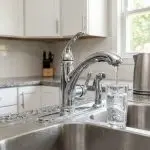
The most visible sign of hard water is white or off-white crusty buildup around faucet bases, showerheads, drain openings, and around the edges of taps. That crust is calcium carbonate scale, left behind when hard water evaporates.
If you are cleaning the same scale off the same fixtures every week and it keeps coming back, you are treating the symptom. A soft water system treats the cause. Once installed, scale formation slows dramatically because the minerals responsible for it have been removed before water reaches those fixtures.
Dishes and glasses that come out of the dishwasher looking cloudy, spotted, or filmy despite using detergent are a reliable indicator of hard water. The spots are mineral deposits left behind as water dries on surfaces.
This is one of the most consistent complaints Indianapolis homeowners bring to water treatment consultations. It is also one of the most immediately noticeable improvements after a home water softener is installed. Soft water rinses away more cleanly, and the minerals that cause spotting are no longer present in the water entering the dishwasher.
Hard water minerals interfere with how soap and shampoo perform. They react with the active ingredients in cleansing products to form a residue rather than a proper lather. That residue stays on your skin and hair after rinsing, leaving skin feeling tight and dry and hair looking flat and dull.
If you find yourself going through more moisturizer than seems normal, or your hair feels unmanageable despite using quality products, your water is likely a contributing factor.
Soap, shampoo, and laundry detergent all lather better in soft water. Hard water minerals bind with soap molecules and reduce their effectiveness. The result is products that feel like they are not working properly, requiring more product to achieve the same cleaning result.
If you are consistently using more soap, shampoo, or detergent than the recommended amount and still not getting satisfying results, hard water is almost certainly the reason. A soft water system resolves this immediately. Soft water allows cleaning products to perform as they are designed to.
This is the warning sign that tends to cost Indianapolis homeowners the most money over time. Hard water deposits mineral scale inside water heaters, dishwashers, and washing machines. That scale builds up gradually, forcing appliances to work harder, use more energy, and break down sooner than they should.
A water heater coated with mineral scale has to use more energy to heat water to the same temperature. A dishwasher running hard water accumulates deposits on internal components that reduce cleaning performance over time. A water softener removes hardness minerals before they reach your appliances, helping protect them from the inside out.
If you have replaced appliances ahead of their expected lifespan and cannot explain why, hard water is a strong candidate for the cause.
Laundry washed in hard water does not rinse as cleanly as it should. Mineral residue clings to fabric fibers, leaving clothes feeling stiff and rough after washing. Colors fade faster. White items develop a dull, grey tint over time.
If your laundry feels rough straight out of the wash or colors are not holding the way they used to, hard water is likely contributing. A water softener system allows detergent to work more effectively and rinse away more completely, leaving fabric softer and colors brighter wash after wash.
Scale does not just build up on visible surfaces. It accumulates inside pipes, showerheads, and faucet aerators. Over time, that buildup narrows water flow, increases pressure on plumbing joints, and contributes to the kind of maintenance issues that seem to require repeated attention without a clear cause.
If your showerheads clog regularly, your aerators need cleaning more often than they should, or your plumber has mentioned scale buildup during a service call, a best water softener system matched to your home’s hardness level is the most practical long term solution.
What To Do Next
Zenith’s Essentials Series and Performance Series softeners are sized to your water test and household demand, with premium components as standard.
If several of these warning signs are present in your home, the right next step is not to buy the first water softener you find online. It is to test your water.
A professional in home water test tells you your exact hardness level in grains per gallon. That number determines the right system capacity for your household size and daily water demand. An undersized system will not keep up. An oversized one costs more than necessary. The right home water softener is the one sized and configured for your actual water conditions.
At Zenith Pure Solutions, every recommendation starts with a professional in home water test. Our certified technicians measure your water hardness, review your household’s usage, and recommend the right soft water system for your home. No guesswork. No pressure. Just honest guidance based on what your water actually contains.
Contact Zenith Pure Solutions today to schedule your free in home water test and find out whether a water softener system is the right solution for your Indianapolis home.
The Bottom Line
A soft water system is not a luxury upgrade for Indianapolis homeowners. At 16 grains per gallon, the city’s water hardness makes it a practical necessity for most households. Scale on fixtures, spotted dishes, dry skin, appliance damage, stiff laundry, and recurring plumbing issues are not random problems. They share a single cause.
The warning signs are there. The question is how long you are willing to ignore them.
Start with a water test. Know your numbers. Install the right water softener system for your home. Then stop dealing with problems that have a clear, proven solution.
Latest News
-
 Soft Water System Warning Signs: How to Know Your Home Needs One24 Sep 2026 Water Softener
-
Hard Water Solutions for Indianapolis Homes: What Really Works?24 Sep 2026 Hard Water
-
 Whole Home Filtration System for Well Water: The Truth No One Is Telling You24 Sep 2026 Well Water Treatment
-
 Innovations in Indianapolis Water Treatment Systems24 Sep 2026 Water Treatment
-
Assessing Water Quality Standards in Indianapolis24 Sep 2026 Water Quality

Related posts


