
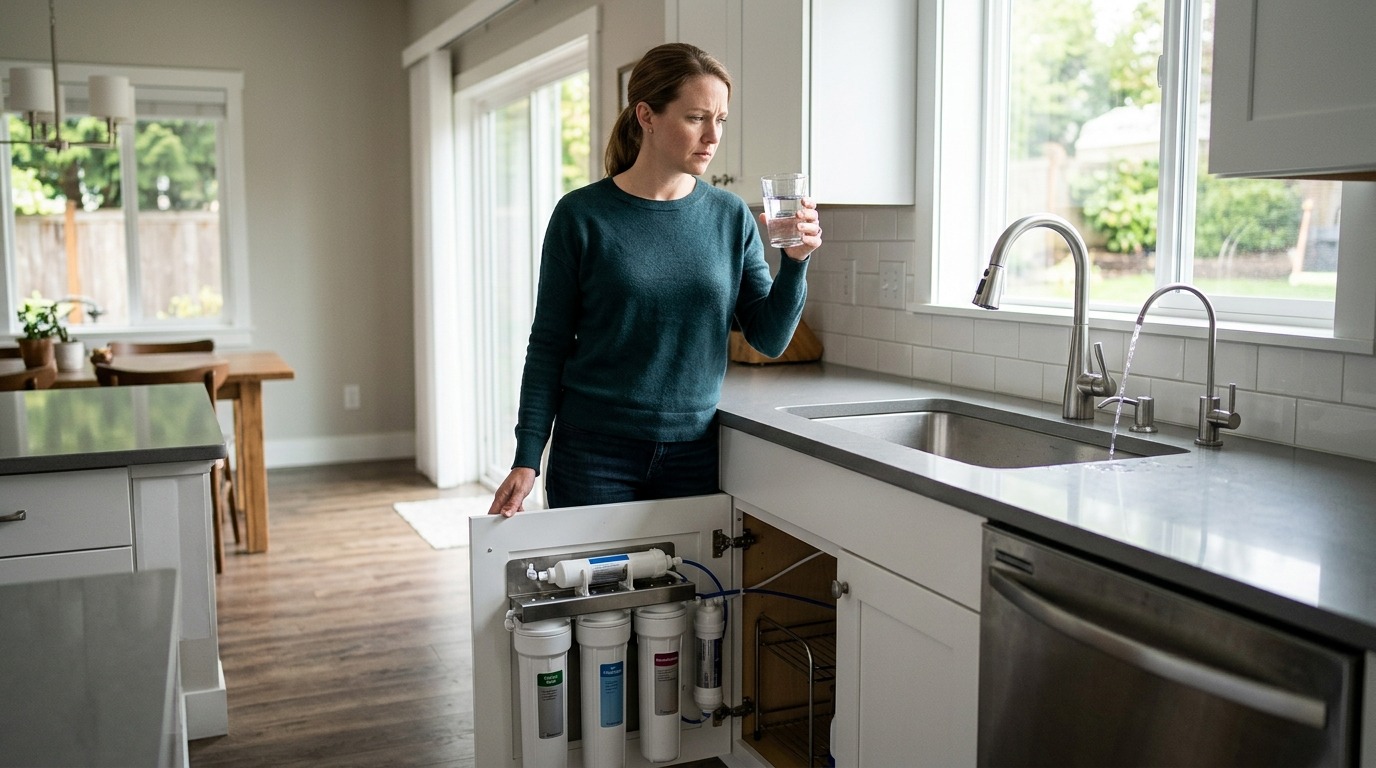
You cannot see PFAS in your water. You cannot taste them. You cannot smell them. That is exactly what makes them one of the most serious drinking water concerns in the United States right now.
PFAS, which stands for per- and polyfluoroalkyl substances, are synthetic chemicals used in industrial and consumer products for decades. They do not break down in the environment or in the human body, which is why they are commonly called forever chemicals. They have been detected in water supplies across the country, including communities throughout Indiana.
A PFAS water filter is one of the most effective tools available to Indianapolis homeowners who want to reduce their exposure at the tap. But many homeowners do not know when they need one or what warning signs to look for.
Here are 6 signs it is time to upgrade your drinking water with a PFAS water filter.
Sign 1: You Haven’t Checked Your Utility’s PFAS Results
The EPA has set enforceable maximum contaminant levels for several PFAS compounds, but those limits are recent and regulatory science continues to evolve. Federal monitoring from 2023 to 2025 (EPA UCMR 5) found PFAS above the 2024 federal limits in some Indiana public water systems.
If you are drinking unfiltered Indianapolis tap water, you do not know your actual PFAS exposure level without testing. A PFAS water filter gives you more control over what reaches your glass.
Sign 2: You Live Near Industrial Areas Or Military Bases
PFAS contamination is not evenly distributed. Properties located near industrial facilities, manufacturing plants, airports, or military bases face a statistically higher risk of PFAS in their water supply. These sites have historically used PFAS containing products including certain firefighting foams, industrial coatings, and manufacturing chemicals.
Indianapolis and surrounding Indiana communities include areas with varying levels of industrial activity and proximity to sites where PFAS use has been documented. If your home is located near any of these sources, PFAS filtration should be a serious consideration regardless of whether your municipal water report shows a concern.
Sign 3: Your Water Has Never Been Tested For PFAS
Standard water tests do not automatically include PFAS. A basic hardness test, a municipal water quality report, and even most home test kits do not cover forever chemicals. PFAS testing requires a specific laboratory analysis using methods capable of detecting these compounds at very low concentrations.
If your drinking water has never been tested specifically for PFAS, you are making assumptions about your exposure that have no data behind them. That is a risk most Indianapolis families would not take if they understood it clearly.
Certified lab testing can identify whether PFAS are present in your supply and at what concentrations, giving you the information you need to make a genuinely informed decision about PFAS filtration.
Sign 4: You Want Extra Peace of Mind for Your Family
PFAS exposure is a concern for everyone, but developing bodies face heightened vulnerability. The EPA and major health organizations have specifically flagged the importance of reducing PFAS exposure for pregnant women, infants, and young children.
An under sink water filter certified for PFAS reduction installed at the kitchen tap provides targeted protection at the point where drinking and cooking water is drawn every day.
This is not a precaution that requires confirmed contamination to be justified. For many families, a PFAS water filter is a practical step toward peace of mind.
Sign 5: Your Pitcher Filter Is Not PFAS Certified
Many Indianapolis homeowners use pitcher filters or basic faucet attachments believing their drinking water is protected. Some of those filters reduce chlorine taste and certain sediment. Very few are certified to reduce PFAS.
PFAS filtration requires specific filter media and verified performance. A carbon filter that is not specifically certified for PFAS will not reliably reduce these compounds even if it improves the taste and appearance of your water.
If your current drinking water filter does not carry one of those certifications specifically for PFAS reduction, it is not providing the protection you likely assume it is.
Sign 6: You Are Relying On Bottled Water As A Solution
Many Indianapolis homeowners who are concerned about their tap water turn to bottled water as a solution. It feels safer. It tastes better. It avoids the uncertainty of what is coming out of the tap.
The problem is that bottled water is not a reliable long term solution for PFAS exposure. Bottled water is regulated differently than tap water and is not required to meet the same testing and disclosure standards. Some bottled water sources have themselves tested positive for PFAS compounds. It is also expensive, environmentally wasteful, and impractical for cooking and food preparation.
A certified PFAS water filter installed at your kitchen sink provides cleaner, filtered drinking and cooking water on demand at a fraction of the long term cost of bottled water. It gives you control over what is in your water rather than trusting a label.
What A PFAS Water Filter Actually Does
Zenith offers two options: a whole-home PFAS reduction system that treats water before it reaches every tap, and the Guardian RO800 under-sink system for drinking and cooking water. We recommend a system only after certified lab testing confirms what’s in your water.
Not every filter addresses PFAS. The ones that do use specific media, most commonly high performance activated carbon or reverse osmosis membranes, that are designed to help reduce PFAS compounds.
Marketing language without third party certification is not sufficient basis for a purchasing decision.
PFAS filtration systems designed for point of use installation sit under your kitchen sink and deliver filtered water through a dedicated tap. They treat the water you drink and cook with directly, which is where PFAS exposure through water consumption primarily occurs.
Why Professional Testing Comes First
The smartest first step before purchasing any drinking water filter is to test your water. Without knowing your actual PFAS concentration, you cannot evaluate how serious your exposure risk is or confirm that a system is performing as expected after installation.
At Zenith Pure Solutions, every visit starts with a free in-home water test, and we arrange certified lab testing for PFAS. Our trained local team explains your results in plain language and recommends a PFAS water filter matched to your specific water profile and household needs.
We serve Indianapolis and surrounding communities. Every consultation is free with no obligation and no pressure.
Contact Zenith Pure Solutions today to schedule your free in home water test and find out whether a PFAS water filter is the right upgrade for your Indianapolis drinking water.
The Bottom Line
PFAS are in water supplies across the United States. They are invisible, tasteless, and do not break down. Regulatory standards are still catching up to the science. Testing is the only way to know where your water stands.
The 6 signs in this article are not worst case scenarios. They are practical indicators that a PFAS water filter deserves serious consideration for your Indianapolis home. A certified system gives you direct control over what is in your drinking water every day.
Start with a water test. Know what is in your water. Then choose the system that fits your results.