
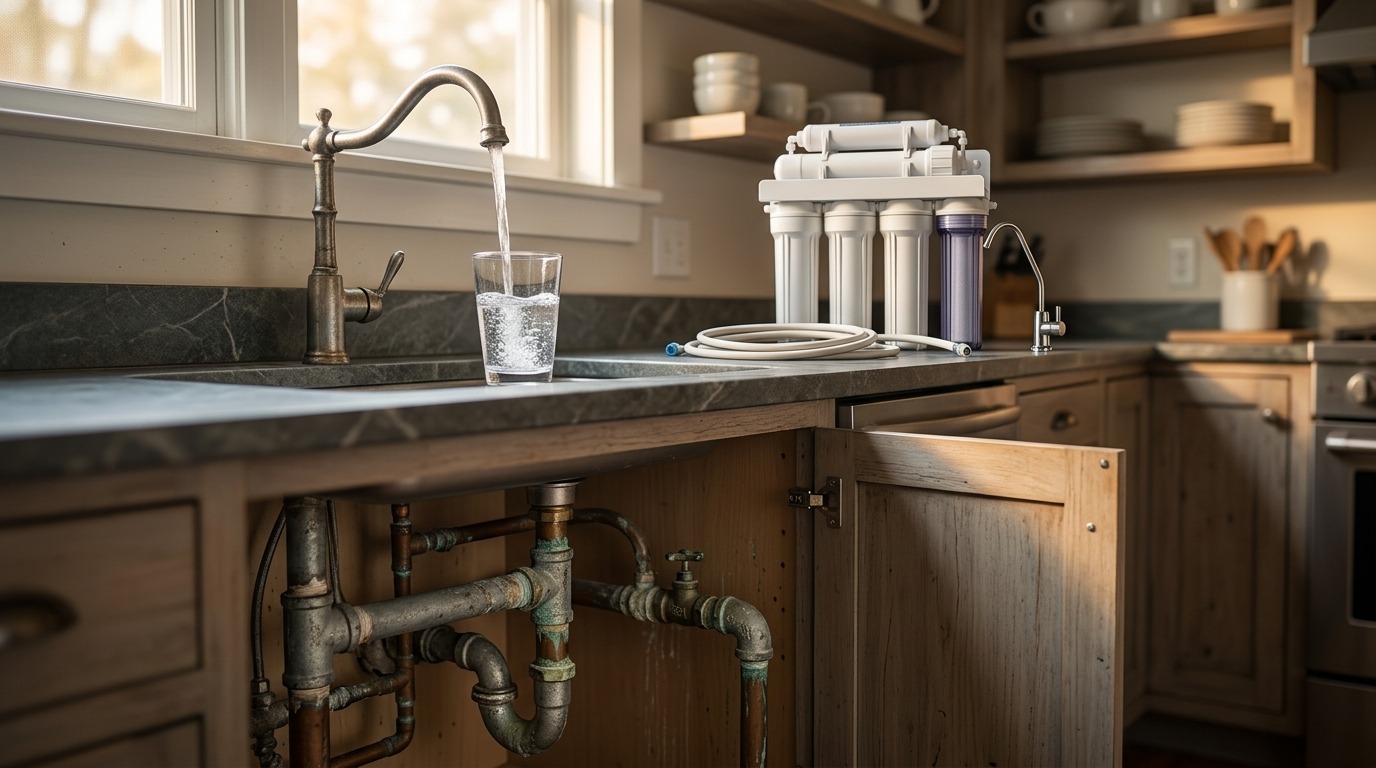
For Indianapolis homes and businesses, choosing a water filtration system for lead is a practical decision about risk reduction, not a luxury upgrade. Lead can enter drinking water through plumbing materials that contain lead, and certified filtration can reduce exposure when the right system is selected, installed, and maintained. The goal is straightforward: identify a lead water filter that is certified for lead reduction and sized for the way the water is actually used.
Does Water Filtration Remove Lead?
Yes, the right filtration system can help reduce lead when it is correctly selected, installed, and maintained according to the manufacturer’s instructions. The key detail is certification: the CDC advises using a point-of-use filter certified by an independent testing organization for NSF/ANSI Standard 53 for lead removal and NSF/ANSI Standard 42 for particulate removal.
That means not every filter is a lead filtration system. A product may improve taste, reduce visible particles, or fit neatly under a sink, but those features do not prove water filtration lead removal. For Indianapolis residents comparing products, the label and performance data matter more than broad marketing claims.
The best starting point is the exact contaminant claim. Look for language that says the unit is certified to reduce lead, not just “tested to standards” or “made with lead-free materials.” NSF also notes that certification to a standard does not mean a filter reduces every contaminant, so buyers should verify the exact reduction claim tied to the model.
Why Lead Filtration Matters In Indianapolis
Homes built before 1986 are more likely to have lead in their plumbing. Lead has no taste, color, or smell, so the only way to know is certified lab testing, which we can arrange.
Indianapolis properties vary widely in age, plumbing materials, and fixture condition. That makes a single assumption about tap water unreliable. A lead water filter provides a targeted barrier at the point where water is used for drinking, cooking, and preparing infant formula.
Lead is a concern because it can enter water after the water leaves the treatment plant, often through service lines, solder, brass fixtures, or interior plumbing that contains lead. The CDC states that lead can get into drinking water through chemical reactions with plumbing materials containing lead.
For households, the practical takeaway is clear: filtration should focus on the taps used for consumption. For businesses, schools, offices, and other facilities in Indianapolis, a commercial water filtration system for removing lead should be planned around water demand, fixture locations, filter capacity, and replacement schedules.
What Makes a Filter Effective for Lead Reduction
An effective water filtration system that removes lead is not defined by size alone. Pitchers, faucet-mounted filters, under-sink units, and reverse osmosis systems may all be options, but only if the specific model carries the correct lead-reduction certification.
When comparing systems, focus on these details:
- Certification For Lead Reduction: Confirm NSF/ANSI 53 for lead reduction on the product, packaging, performance sheet, or certifier listing.
- Particulate Reduction: Lead may be dissolved or attached to small particles, so particulate reduction claims are important.
- Exact Model Verification: Check the model number, not just the brand name.
- Filter Capacity: Certified products typically list how much water the cartridge can treat before replacement.
- Flow Rate: A system that is too slow may discourage regular use; one that is too small may not match demand.
- Replacement Access: A filter is only protective when cartridges are changed on schedule.
These details separate a general filter from a true lead filtration system.
Whole-Home or Point-of-Use: Which Is Right for You?
When choosing a lead water filter, it is important to understand the difference between whole-home and point-of-use filtration. Each serves a different purpose, and the right option depends on your household’s water quality, usage, and priorities.
A whole-home water filtration system treats water as it enters the house, supplying filtered water to every tap, shower, and appliance. While whole-home systems can address a range of contaminants throughout the home, reducing lead typically requires a system that is specifically certified for lead reduction. Some homeowners choose a whole-home system to improve overall water quality while pairing it with a dedicated drinking water filter for added protection.
A point-of-use lead water filter treats water at a specific tap, faucet, pitcher, or drinking-water line. EPA and CDC guidance emphasizes certified point-of-use filters as an effective way to reduce lead exposure in drinking and cooking water when they are properly installed, certified, and maintained.
For many Indianapolis homes, a point-of-use filter may be sufficient if the primary concern is drinking and cooking water. However, households looking to improve water quality throughout the home may benefit from combining a whole-home filtration system with a certified point-of-use lead filter. The best choice depends on your water test results, household water use, available space, and long-term maintenance preferences.
How Should Indianapolis Buyers Compare Lead Filter Options?
Indianapolis buyers should compare lead filters by certification, use case, capacity, and maintenance requirements before considering convenience or appearance. The strongest choice is the one that reliably treats the water people will drink every day.
A simple comparison process helps prevent poor purchases:
- Identify The Drinking Water Points List the taps or dispensers used for drinking, cooking, coffee, ice, or formula preparation.
- Match The System To The Use A pitcher may suit a small household. An under-sink lead filtration system may fit a family that cooks often. A commercial water filtration system for removing lead may be needed where many people use the same water source.
- Verify Certification Before Buying Use the exact model number to confirm the filter is certified for lead reduction. NSF states that filters are tested and certified to NSF/ANSI 53 and 58 to reduce contaminants, including lead, according to the requirements of those standards.
- Check Cartridge Life A high-performing filter loses value if replacement cartridges are difficult to find, expensive to maintain, or easy to forget.
- Plan For Ongoing Use Follow installation and flushing instructions. Replace cartridges on time. Use filtered water consistently for drinking and cooking.
Common Mistakes To Avoid
The most common mistake is assuming that any filter will remove lead water contamination. Many filters are designed for other purposes and may not carry a lead-reduction claim. A label that says “NSF certified” should still be checked for the specific standard and contaminant reduction claim.
Another mistake is buying based only on brand familiarity. Certification applies to specific models and cartridges, not always to every product a company sells. If the filter cartridge changes, the certification and performance details should be checked again.
Maintenance is also critical. A certified water filtration system for lead depends on correct installation, regular cartridge replacement, and proper use. If a filter is used beyond its rated capacity, lead reduction may no longer perform as expected.
Choosing A System With Confidence
Zenith offers two ways to help reduce lead: a whole-home lead and heavy metal reduction system that treats water at the main line before it reaches every tap, and the Guardian RO800 under-sink system for drinking and cooking water. The RO800’s carbon and membrane components are certified to NSF/ANSI standards. We recommend the right option only after testing your water.
The right lead filtration decision is evidence-based. In Indianapolis, buyers should start with where drinking water is used, then choose a certified lead water filter that matches daily demand. The system should be easy to maintain, clearly certified, and practical enough that people will use it every day.
The answer to ‘does water filtration remove lead’ is that the right system can help reduce it, but only when it is matched to your water test results. For safe drinking water, choose a water filtration system for lead with verified lead-reduction claims, follow the instructions, and replace filters on schedule. That disciplined approach is what turns a filter purchase into real protection.