
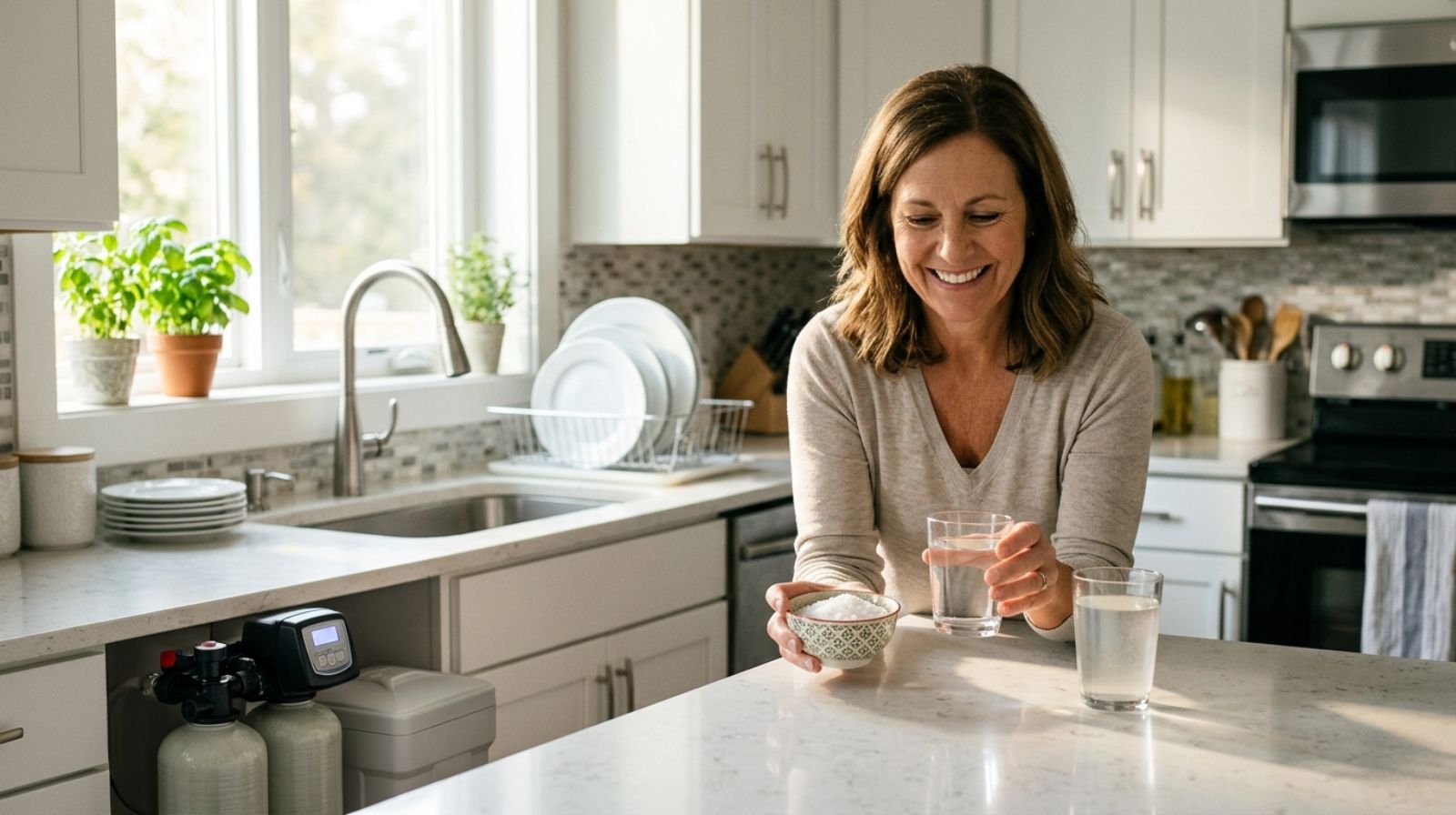
Indianapolis water is very hard, about 317 ppm, or 19 grains per gallon (see our Indianapolis water hardness guide). That hardness is calcium and magnesium. It is safe to drink, but it leaves scale on everything the water touches.
A water softener takes those minerals out before the water reaches your taps, showers and appliances. This guide covers the benefits of a water softener system, what a softener does not do, and how to choose one for your home.
Why hard water is a problem in Indianapolis
Central Indiana sits on limestone. Groundwater picks up calcium and magnesium as it moves through the rock, and it still carries them when it reaches your home. Most homeowners spot the signs long before they test their water.
- White or yellowish scale on faucets and showerheads
- Cloudy glasses and spotted dishes straight out of the dishwasher
- Towels and clothes that feel stiff after washing
- Soap and shampoo that do not lather well or rinse clean
- Crusty buildup inside kettles, coffee makers and the water heater
These are water problems, and more cleaning does not fix them. A softener treats the cause where the water enters the house.
How a water softener works
A softener uses ion exchange. Hard water flows through a tank of resin beads. The beads hold on to calcium and magnesium and release a small amount of sodium in their place. Soft water then flows to every tap and appliance in the home.
When the resin is full, the system rinses it with salt water from the brine tank and sends the minerals down the drain. This is called regeneration. Most modern softeners regenerate based on how much water you actually use, which saves salt and water compared with older timer models. Our article What Is a Home Water Softener? explains the parts in more detail.
Water softener benefits you notice at home
Cleaner dishes, fixtures and showers
With the minerals gone, there is far less scale to leave marks. Glasses come out of the dishwasher clearer. Faucets, sinks and shower doors stay clean longer, and soap scum builds up more slowly. Most households find they spend less time scrubbing.
Soap and detergent work better
Hardness minerals react with soap and stop it from lathering. In soft water, soap, shampoo and detergent lather fully and rinse away cleanly. Many households find they can use less of each.
Softer laundry, skin and hair
Clothes and towels washed in soft water tend to feel softer, because less mineral and detergent residue stays in the fabric. Many people also say their skin feels less dry and their hair is easier to manage after a softener goes in. Results vary from person to person.
Benefits you do not see: plumbing and appliances
Scale does not stop at the surfaces you can see. It builds up inside pipes, where it slowly narrows the flow, and inside every appliance that heats or holds water.
The water heater takes the worst of it. A layer of scale on the heating surface makes the heater use more energy to heat the same water, and it wears the tank out sooner. Dishwashers, washing machines and coffee makers suffer in the same way.
A softener removes the minerals before they reach any of this equipment. Over the years that means fewer clogged aerators, fewer repairs and appliances that last closer to their full life. Our article on hard water damage and its hidden costs looks at this in more detail, and Are Water Softeners Worth It? weighs the cost against the savings.
What a water softener does not do
A softener is built for one job, which is hardness. It helps to be clear about the rest.
- It is not a filter. A softener does not remove lead, chlorine or PFAS. Those need water filtration or a reverse osmosis system for drinking water.
- It needs salt. You top up the brine tank from time to time, and the system uses some water each time it regenerates.
- It adds a small amount of sodium to the water. If you are on a low-sodium diet, ask your doctor, and consider reverse osmosis at the kitchen sink, which reduces sodium in drinking water.
- It needs simple care. Our water softener maintenance tips cover what to check and when.
If you want to control scale without salt, read our guide to salt-free water softeners. They work differently and do not soften the water.
Choosing the right water softener for your home
No single softener suits every home. These are the points that decide it.
- Water hardness. A water test gives the exact figure in grains per gallon. Every other choice follows from that number.
- Household size and water use. A family of five needs more capacity than a couple. The number of bathrooms and how much laundry you do both matter.
- Size of the system. A unit that is too small regenerates all the time. One that is too big costs more than you need to spend.
- Space and plumbing. A softener has a resin tank and a brine tank. They go in the pre-plumbed area if your home has one, or in the best place with a water line and a drain.
- Care. Any softener needs salt and an occasional check. A system you can look after easily is the one that keeps working.
Zenith installs two softener lines, the Essential Series and the Performance Series. Both come in sizes from 32,000 to 80,000 grains, as a single tank or a dual tank. If you would rather not buy, our rental program includes service and repairs.
What installation involves
A typical installation takes 2 to 4 hours. Our team connects the softener to the main water line with a bypass valve, runs the drain line, fills the brine tank with salt and sets the system for your water hardness. Before we leave, we show you how the bypass works, how to add salt and what to look out for. See water softener installation for the full process.
A softener that is sized correctly and looked after usually lasts 10 to 15 years. Our article on how long water softeners last explains what affects that.
Start with a free water test
Before you compare systems or prices, find out what is in your water. Our free in-home water test measures your hardness and other readings, and gives you a Zenith Water Health Index score with a written quote. There is no obligation.
Zenith Pure Solutions tests and installs across Indianapolis and nearby communities, including Fishers, Carmel, Noblesville and Westfield. See where we work, or book your free water test today.
Questions homeowners ask
What are the main benefits of a water softener system?
Less scale on fixtures and inside pipes, cleaner dishes and laundry, soap that lathers and rinses properly, and water-using appliances that work better and last longer. Many people also find soft water kinder to skin and hair.
Does a water softener make water safer to drink?
No. A softener removes hardness minerals, which are not a health risk. It does not remove lead, chlorine or PFAS. For those, look at water filtration or reverse osmosis.
Can I drink softened water?
Most people can. Softening adds a small amount of sodium to the water. If you are on a low-sodium diet, ask your doctor. A reverse osmosis system at the kitchen sink reduces sodium in drinking water.
How do I know if I need a water softener?
Look for white scale on faucets, spotted dishes, stiff laundry and soap that will not lather. To know for certain, book a free in-home water test. It gives you the exact hardness of your water.
How long does a water softener last?
A softener that is sized correctly and looked after usually lasts 10 to 15 years. See how long water softeners last.
Can I rent a water softener instead of buying one?
Yes. Zenith’s rental program runs for 36 months. Repairs are included, unless a repair is needed because of damage the customer caused. Salt is not included in the plan price.